Parks & Recreation

Stuttgart is known as an automobile city, but there is lots of green space as well. In fact, Stuttgart has strategically planned green corridors to improve air quality. That means that even within the city center there are plenty of parks and options for outdoor activities.
Below you will find the parks newcomers ask us about most, each with a short overview and the basics for a first visit. The parks themselves are free to enter; only the Wilhelma charges admission.
Jump to: Schlossgarten · Rosensteinpark · Wilhelma · Weissenburgpark · Uhlandshoehe · Max-Eyth-See · Hoehenpark Killesberg · Birkenkopf · Rotwildpark and Baerensee
Schlossgarten (Castle Garden)
The longest park in the city center, and one of the largest, is the Schlossgarten, or Castle Garden. It is divided in three parts by major streets, but there are bridges for pedestrians and cyclists to keep them all connected. Just behind Schlossplatz lies the Oberer Schlossgarten (Upper Castle Garden). It surrounds the Eckensee pond, is bordered by the opera house, the state parliament and the Neues Schloss (New Palace), and is an ideal picnic spot. Heading north you reach the Mittlerer (Middle) Schlossgarten with its big beer garden and the Planetarium, and then the Unterer (Lower) Schlossgarten with its long avenue of plane trees leading toward the Neckar.
At its far end the Schlossgarten runs straight into Rosensteinpark. Together with Rosensteinpark, the Killesberg and three smaller parks it forms the “Green U”, a green belt of about 8 km (5 mi) that is perfect for a long walk or jog.
- District: Stuttgart-Mitte, stretching northeast toward the Neckar
- Size: more than 60 hectares (150 acres)
- Highlights: Eckensee pond, beer garden, Planetarium, play areas and lawns for picnics in the Lower Garden
- Getting there: Schlossplatz (U5, U6, U7, U12, U15) for the Upper Garden; Hauptbahnhof (S1 to S6, S60) or Staatsgalerie (U1, U2, U4, U9, U14) for the Middle Garden; Mineralbaeder (U1, U2, U14) at the Lower Garden
Rosensteinpark
Right next to the Lower Castle Garden, Rosensteinpark is considered the largest English-style landscape park in southwest Germany. King Wilhelm I had it laid out between 1824 and 1840, and today its old trees and wide lawns are a favorite for picnics and long, quiet walks. The park is also home to the State Museum of Natural History: fossils and dinosaurs in the Museum am Loewentor, and today’s animal world in Schloss Rosenstein.
- District: Bad Cannstatt
- Size: 100 hectares (247 acres)
- Highlights: natural history museum (two buildings), large playground in front of the Museum am Loewentor, rose garden at Schloss Rosenstein, picnic lawns
- Getting there: Loewentor (U12, U13, U16) at the north gate, Nordbahnhof (S4, S5, S6, S60, U12), or Rosensteinbruecke (U13, U14, U16) near the Wilhelma
Wilhelma Zoo and Botanical Garden
On the east side of Rosensteinpark lies the Wilhelma, Stuttgart’s zoological and botanical garden and one of the most visited zoos in Germany. It is set in a 19th-century royal garden with Moorish-style buildings and shows around 11,000 animals of almost 1,200 species and more than 8,500 plant species. Plan at least half a day, especially with kids.
- District: Bad Cannstatt
- Size: about 30 hectares (74 acres)
- Highlights: zoo and botanical garden, aquarium, historic Moorish gardens and greenhouses
- Opening hours: every day of the year from 8:15 am; closing time depends on the season (4:30 pm from November to February)
- Entry: paid admission, tickets on the Wilhelma website or at the gate
- Getting there: Wilhelma (U13, U14, U16), right at the main entrance. The entrance in Rosensteinpark is currently closed for construction, and the Pragstraße entrance is closed until the end of February 2027
Sources: Wilhelma: Opening hours Checked: Nov 2026
Weissenburgpark
One of the most scenic parks is the Weissenburgpark, located on a hill in the southeast of the city. If you walk up to the top you get one of the best panoramic views of Stuttgart, with the TV Tower right behind you. The Teehaus, a popular café with outdoor seating, serves food and drinks to enjoy with the view, and the meadow below the lookout is a nice spot for a picnic.
- District: Stuttgart-Sued
- Size: a small hilltop park
- Highlights: lookout platform, Teehaus café, the historic Marmorsaal (an event venue), picnic meadow
- Getting there: Bopser (U5, U6, U7, U12), then a short walk uphill
Uhlandshoehe
On the east side of the city center, the Uhlandshoehe is a historic hilltop park with old trees, quiet paths and a small lookout tower. It is named after the poet Ludwig Uhland, whose bronze bust stands in the park. At the top you will find the Stuttgart Observatory (Sternwarte), a public observatory that offers guided stargazing evenings when the sky is clear.
- District: Stuttgart-Ost
- Highlights: public observatory (evening tours Monday and Wednesday to Saturday, solar viewing on Sundays from March to October, small entry fee, only when the sky is clear), Uhland monument, shady paths
- Getting there: Heidehofstraße (U15), then a short walk uphill
Sources: Sternwarte Stuttgart Checked: Nov 2026
Max-Eyth-See
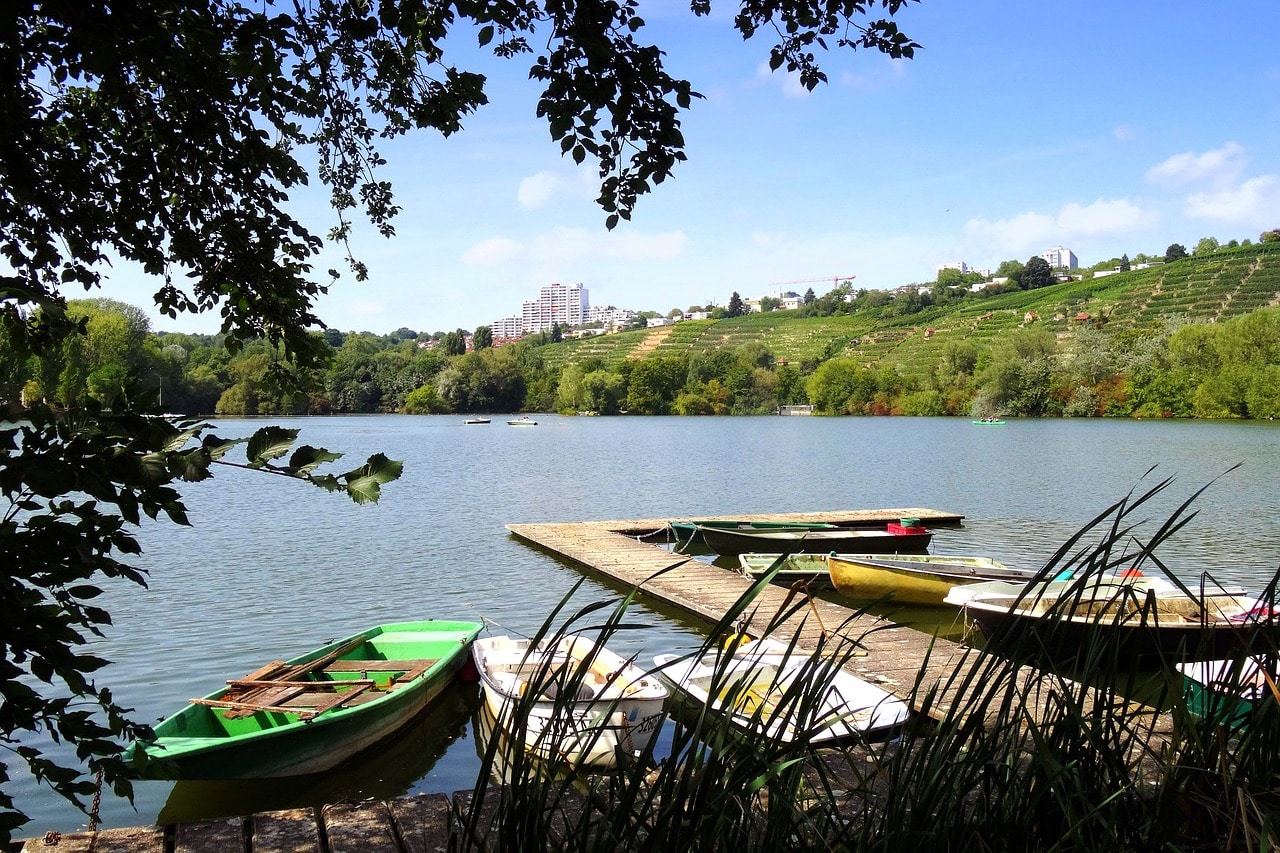
Right on the Neckar River in the north of the city, the Max-Eyth-See is one of Stuttgart’s largest lakes and a favorite summer spot. Paths around the lake are great for walking, cycling and inline skating, and the wide lawns are popular for sunbathing, picnics and barbecues. You can rent pedal, rowing or electric boats, and part of the lake is a bird sanctuary with herons, grebes and cormorants. Swimming is not allowed.
- District: Muehlhausen
- Size: the lake is about 600 m (0.4 mi) long
- Highlights: boat rental, restaurant and beer garden, barbecue areas, small sand beach, bird island, the 8 km (5 mi) Four Castles hiking loop; cycling and inline skating around the lake on weekdays
- Getting there: Max-Eyth-See (U12, U14)
Hoehenpark Killesberg
Hoehenpark Killesberg is one of Stuttgart’s most varied parks, laid out on a former quarry and a favorite with families. Climb the 42 m (138 ft) Killesberg Tower for views over the city and the Neckar valley, ride the little Killesbergbahn park railway, or visit the animal enclosures with llamas, goats and ponies. There is also a big adventure playground, a flamingo pond, several cafés and the Hoehenfreibad outdoor pool right next to the park.
- District: Stuttgart-Nord
- Size: about 50 hectares (124 acres)
- Highlights: Killesberg Tower, animal enclosures, adventure playground, park railway (summer months), outdoor pool next door, dahlia show in late summer
- Entry: park and animal enclosures free
- Getting there: Killesberg (U5; buses 43, 44, 50) or Maybachstraße (U6, U13, U16)
Birkenkopf
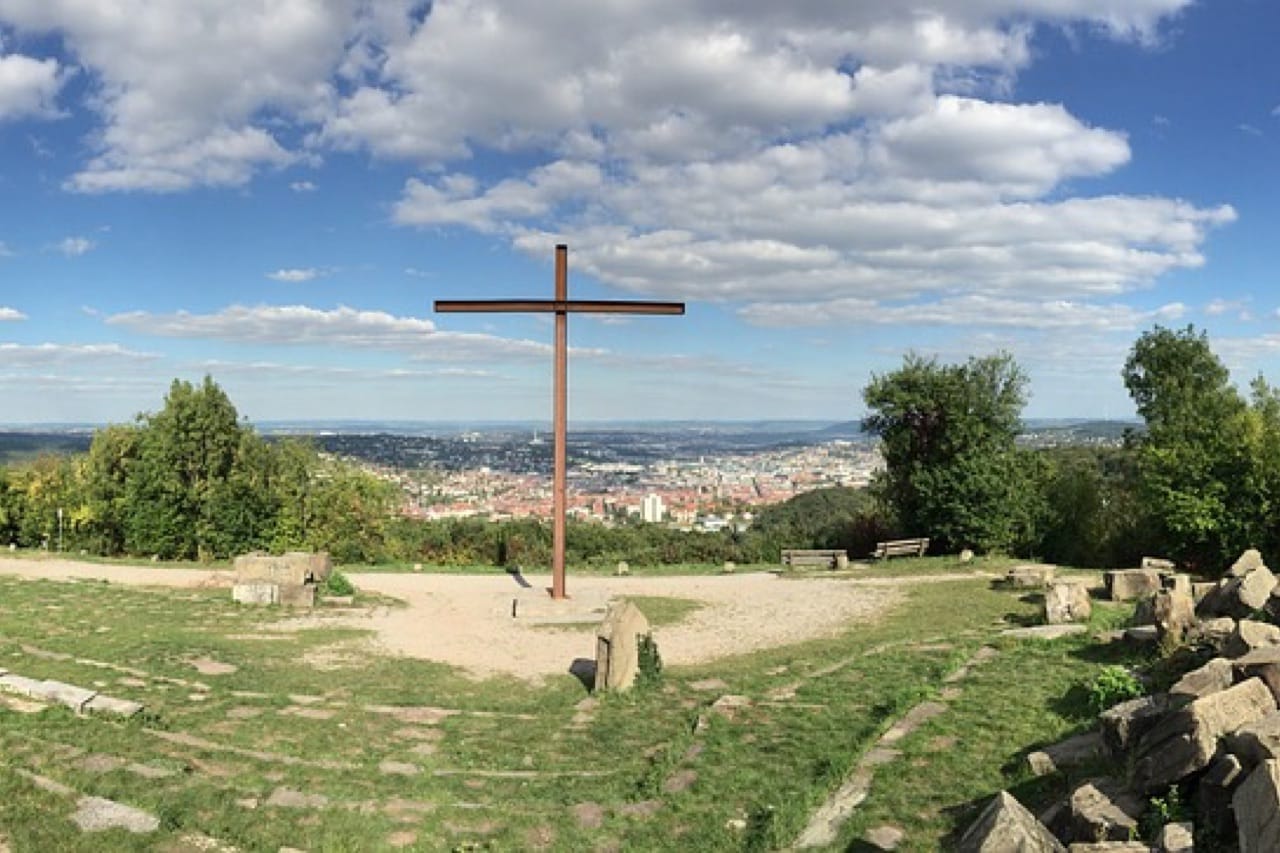
Locals call the Birkenkopf “Monte Scherbelino”. After World War II, rubble from the city’s destroyed buildings was piled up here between 1953 and 1957, raising the hill by about 40 m (130 ft). At 511 m (1,677 ft) it is one of the highest points in Stuttgart, and pieces of facades, reliefs and columns still lie on the summit as a memorial. The climb is rewarded with a wide view over Stuttgart and, on clear days, all the way to the Swabian Alb.
- District: Stuttgart-West
- Highlights: summit memorial with a cross (services are held there in summer), panoramic view
- Getting there: Birkenkopf (bus 92), then a short climb
Rotwildpark and Baerensee
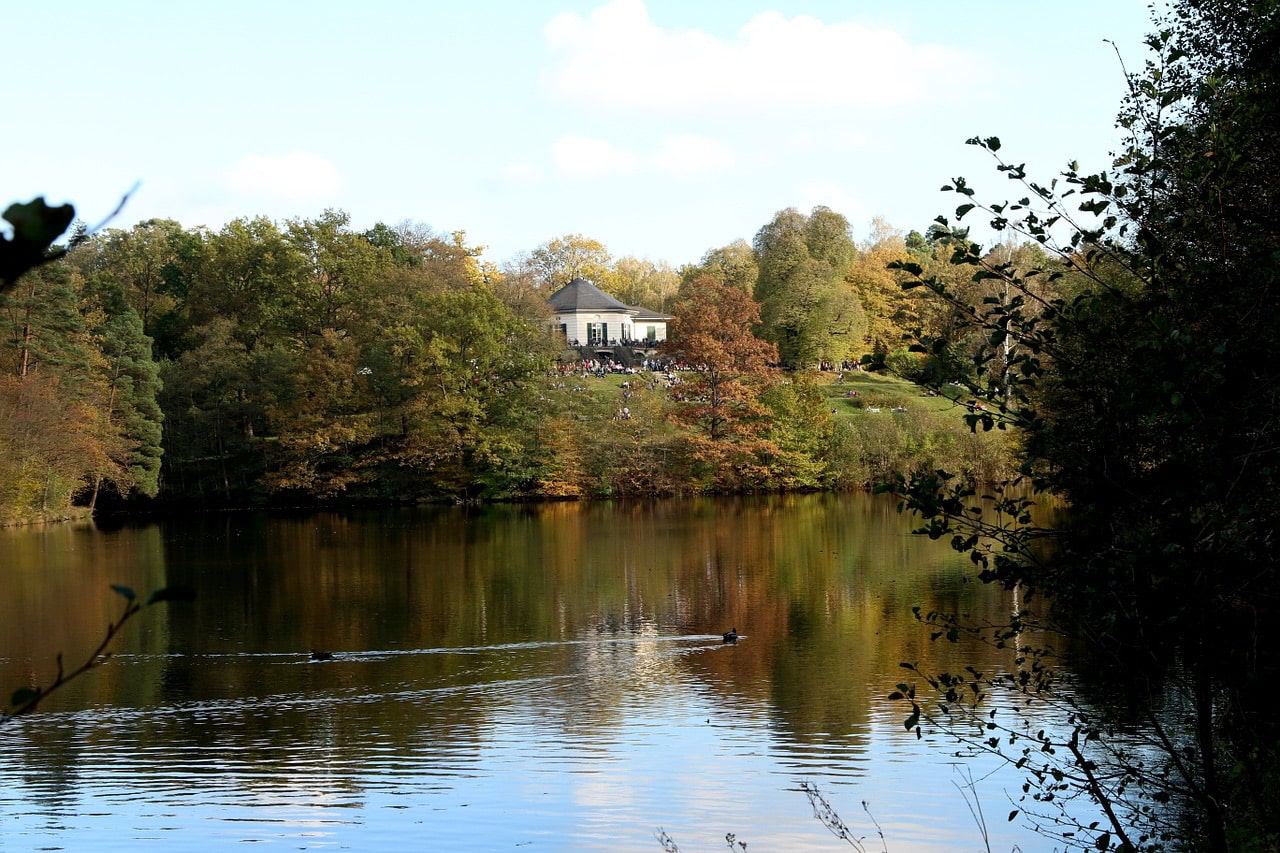
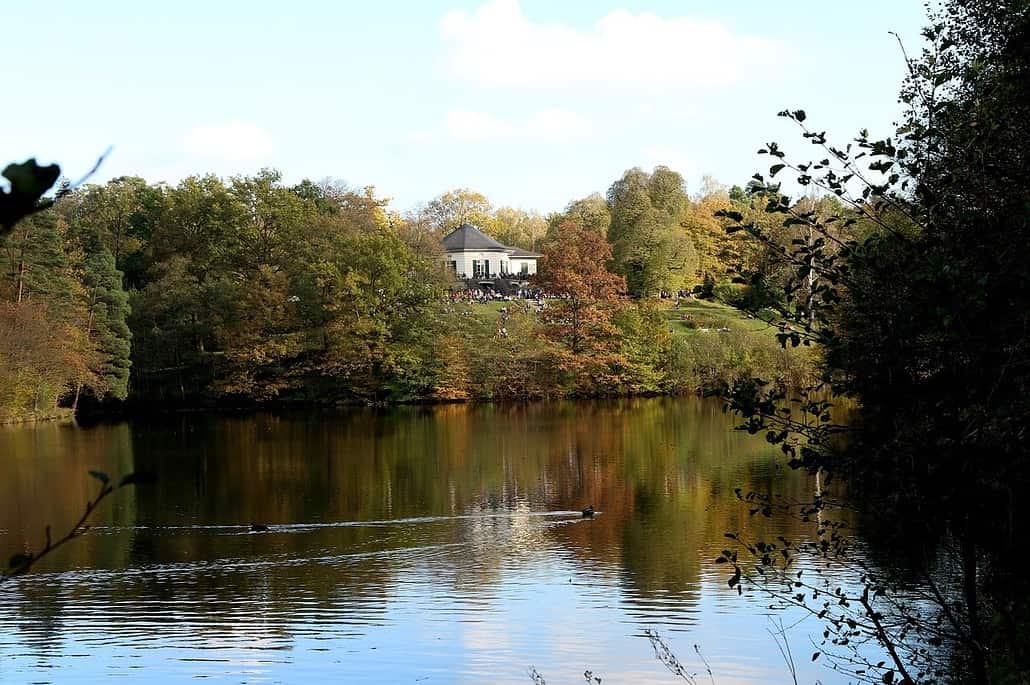
On the western edge of the city, the Rotwildpark is a large forest and nature reserve that was laid out as a royal deer park in 1815. Today it is a lovely place for a walk in the woods, with centuries-old trees and three park lakes. The best known is the Baerensee, where the Baerenschloessle, a historic hunting lodge on the lakeshore, is now a restaurant.
- District: Stuttgart-West
- Size: a large forest nature reserve
- Highlights: Baerensee and two more lakes, Baerenschloessle restaurant, trees up to 400 years old, forest nature trail
- Getting there: Schattengrund (bus 92), then about 10 minutes on foot to the Baerenschloessle
What’s more, Stuttgart is surrounded by forests and vineyards, so there’s always more to explore!