
Fishing in Stuttgart
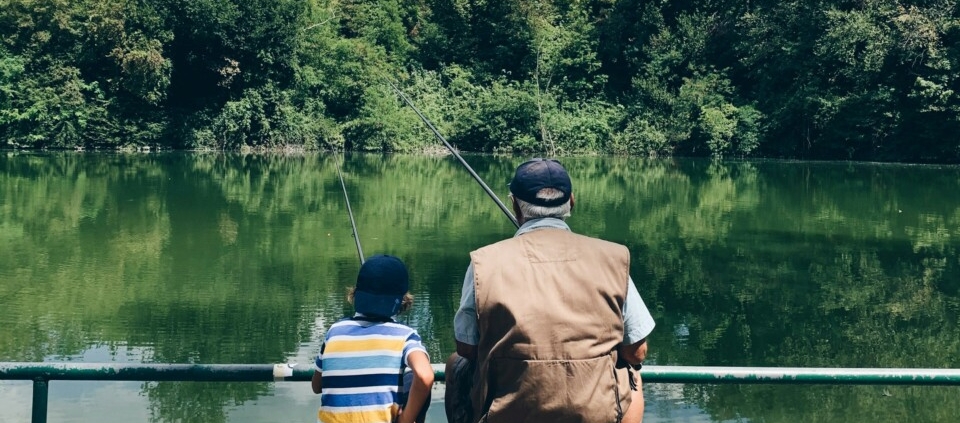
Fishing is a great way to relax and enjoy the great outdoors. There are plenty of scenic spots with opportunities for anglers of all experience levels in and around Stuttgart. However, it’s important to understand the local rules and legislation that govern fishing in the region. This guide will give you a helpful overview of how to get a fishing license, what regulations to follow, and good spots for angling in Stuttgart.
Fishing License (Fischereischein)
Fishing is strictly regulated in Germany, with each state (Bundesland) responsible for regulations within its borders. In Baden-Württemberg, you need a state fishing license, or Fischereischein (also sometimes called an Angelshchein) as well as a permit from the association or owner of the local fishing rights in the place you’d like to go fishing.
Mandatory Course
In Baden-Württemberg, all fishing license applicants must complete 30 hours of a preparatory course and then pass a written exam. The courses cover information on different types of fish and water, fish biology and habitats, fishing equipment, treatment of catch, and legislation related to fish and nature conservation and protection.
Courses are offered by many fishing associations in the area (more information on them in a later section). Fishing-King offers an online course which may be completed at your own pace in a web browser or in their app, but it also requires a single 8‑hour day of in-person instruction.
Fishing License Exam (Sportfisherprüfung)
The fishing license exam must be taken in the federal state of your primary residence. If you are not a resident of Baden-Württemberg, you’ll need to register in your state. Guests who are not residents of Germany can obtain a temporary fishing license (Fremdenfischereischein) in Baden-Württemberg valid for four weeks by presenting a valid fishing license from their home country or meeting other simplified requirements
The fishing exam is offered multiple times a year in each district of Baden-Württemberg, with schedules varying by location. Check with the Landesfischereiverband BW e.V., who oversees the exams in Baden-Württemberg, or local authorities for specific dates. All participants must register in advance and bring their proof of having completed a preparatory course. Registration is available online or through your course provider and closes four weeks before each test date.
The exam is a written test with 60 multiple-choice questions. There are five subject areas covered in the test, with 12 questions for each category. These are:
– General fish science
– Special fish science
– Aquatic ecology and fish conservation
– Equipment
– Legislation
You have two hours to complete the test. To pass, you need to answer at least 45 questions correctly, with at least 6 correct answers within each category. After your test has been evaluated, you will receive a letter in the mail with your pass certificate or a statement that you have failed the exam. You can register to retake the exam without having to do another course.
You can study the complete catalog of possible questions online.
Fees and Validity
When you pass the exam, you receive a certificate that you can exchange at the local town hall for an official fishing license. The pass certificate from the exam has no expiration, but the fishing license is limited in term.
You can decide to pay for your permit to last one, five, or ten years. The license can then be renewed for a fee. The Baden-Württemberg fishing license is recognized across Germany.
Youth License (Jugendfischereischein)
The youth fishing license allows children and teens from ages 7 to 16 to fish when accompanied by an adult who has a valid fishing license. You can apply for a youth fishing license from the local municipal authority (Amt für öffentliche Ordnung, Fischereischeinstelle). No exam is required.
Children and teens who wish to fish without supervision must complete a course and pass the exam to get the normal fishing license. This option is open to children as young as 10 years old (having their 10th birthday at the latest on the day of the exam).
Fishing Permits and Associations
Fishing Permit (Angelkarte / Fischereierlaubnisscheine)
You always need to purchase a permit authorizing you to fish in a particular area in Baden-Württemberg, You can purchase a fishing permit from the local fishing association or angling store after presenting a valid fishing license. Since the permits are specific to a particular location, you should be clear about where you are planning to cast a line before going to get a permit.
Prices vary depending on the region, the season, and the length of the permit’s validity. A share of the price goes to the local authorities who are responsible for keeping the waters clean and stocked with fish.
The permit should include the following:
– The stamp and signature of the issuing fishing association or shop
– The permit’s validation date
– The area or waters allowed to be fished using the permit
– The types of fish that can be found in the area
– Any seasonal fish protection periods
– The minimum size of catch allowed for each species
– Information on regional fishing legislation
Fishing Associations (Fischereiverbände / Anglervereine)
German fishing associations play a central role in managing and preserving local fisheries, promoting sustainable angling practices, and representing the interests of anglers. These associations oversee fishing rights on specific waters, ensure compliance with environmental regulations, and engage in conservation projects such as restocking fish populations and maintaining aquatic habitats.
Local fishing associations are the best source of information about regional waters, fish species, and relevant regulations. They also sell permits to authorize anglers to fish in the areas they oversee.
Membership in a fishing association is not necessarily a requirement to go fishing in the Stuttgart area. However, access to certain fishing areas is restricted to members only. While guest permits are generally easy to obtain for fishing on the Neckar, fishing at many lakes and reservoirs is only allowed with membership.
In addition, there are many benefits of membership for avid anglers. These may include long-term fishing permits in the waters overseen by the association, access to fishing tournaments or training programs, and insurance coverage (for example, liability insurance and legal representation in the case of accidental damage).
You can find more information about fishing associations in the Stuttgart area at the link, but here are a few that may be of particular interest:
The Landesfischereiverband BW e.V. oversees the fishing license exam and provides a wealth of informational resources.
The Württembergischer Anglerverein Stuttgart e.V. is responsible for a large number of fishing areas in Stuttgart, including the Stuttgart stretch of the Neckar River, the Neckarhafen Stuttgart, the Max-Eyth-See in Bad Canstatt, and the Bärensee and other clustered park lakes in the Wildpark of Stuttgart West (more information about these and other local fishing sites in a later section).
The Angler Verein Möhringen e.V. is the caretaker of the Riedsee and Probstsee in Möhringen, both of which are easily accessed by U‑Bahn.
Other Fishing Rules
You should learn most of the relevant information through the process of obtaining a fishing license, but there are a few additional key points worth covering here.
Regulations
Your fishing license and permit can be checked at any time by fishing inspectors, the police, and whoever is responsible for that site’s fishing rights. Special permits are required to fish in nature preserves and other protected areas.
Some fishing associations require that you keep a catch book (Fangbuch) detailing the fish that you catch. They will provide you with a form when you purchase your fishing permit. You often pay a deposit that is returned to you when you hand in your completed catch book.
Equipment Rules
There are strict regulations on fishing equipment in Germany designed to protect fish populations and ensure humane treatment of animals. Live vertebrates are not permitted to be used as bait according to animal welfare laws. Worms, maggots, and similar non-vertebrate live bait are generally allowed in Baden-Württemberg, although individual associations may have more restrictive rules.
In Baden-Württemberg, only active angling is allowed – no electronic devices or automated fishing gear. Each angler may use only one rod at a time. However, a fishing rod may have up to three hooks, and multi-hook lures (e.g., twin or treble hooks or wobblers) may count as a single hook, subject to local permit restrictions.
In general, you are allowed to fish from bridges in permit areas unless otherwise marked.
Penalties
Any violation of local fishing regulations may result in sizable fines. Be sure to check that your fishing permit is for the area you are in and that it has a current validation date. Fishing without a license or permit is considered poaching under the German Criminal Code (§ 293 StGB), with potential fines or, in severe cases, up to two years in prison. Fishing on private property without permission may be treated as trespassing or poaching, with fines or, rarely, imprisonment.
All offenses are noted on your criminal record. An additional consequence is that you may be denied the option of taking the exam for a fishing license after such an offense.
TheLandesfischereiverband BW e.V. has a webpage with links to all of the relevant legislation and regulations connected to fishing in Baden-Württemberg.
Cultural Norms
There’s a high value placed on conservation in Germany, not only in the realm of fishing. Anyone who goes through the mandatory course to prepare for the fishing license exam will be well schooled in the importance of species protection and sustainable practices. Catch and release is a common practice in Baden-Württemberg, especially for juvenile or endangered fish, but must comply with animal welfare laws to avoid harming fish. Check local association rules for guidance.
In popular fishing areas, anglers generally prefer to maintain a polite distance from each other. There’s no strict rule, but it’s respectful to leave enough space that each person can enjoy the tranquility of the natural beauty around them.
Local Fishing Information
Types of Fish
The waters of Baden-Württemberg are home to many native aquatic species, including dozens of species of fish, three species of lamprey, and three species of crayfish. Some of them are unfortunately endangered, but local fishing associations are working to protect and restore their populations. You can read more from the Landesfischereiverband BW e.V. about local fish and also check out this guide to Germany’s native fish species.
Fishing Locations
Stuttgart offers an attractive mix of fishing areas, from the Neckar River and the city harbor to calm park lakes and reservoirs. Be sure to check whether you can purchase a day ticket or need association membership before heading out, though!
Neckar River and Neckarhafen Stuttgart
The Stuttgart area of the Neckar river stretches 21 kilometers (13 miles) and has many good fishing spots. You may find a wide variety of species, including bream, carp, chub, eels, perch, pike, trout, and zander. Guest day‑tickets are available from the Württembergischer Anglerverein Stuttgart e.V. Within the city harbor is a particularly fish-rich part of the Neckar, but fishing there is available only to Württembergischer Anglerverein members.
Max‑Eyth‑See
This popular lake is notable for its recreational options and bird sanctuary zones, which does mean some parts are off-limits to fishing. The Württembergischer Anglerverein has its clubhouse here, the Haus am See, and fishing is only available to members. The association has created a “fish trail” on the walking path with information panels about the fish that live in the lake. Typically you can find abundant bream, carp, catfish, perch, pike, and zander, among other species.
Bärensee, Pfaffensee, and Neuer See
These three historic Parkseen in Stuttgart were formerly part of the city’s emergency water supply and usually offer excellent fishing due to their high water quality. However, Bärensee was drained from late 2022 for dam repairs and is expected to be fished again only around 2027, following restocking (although the actual timeline may vary). Pfaffensee and Neuer See share fish stocks, including pike, carp, perch, tench, eel, and various coarse fish, with trout introduced occasionally. Fishing requires membership in the Württembergischer Anglerverein.
Katzenbachsee and Steinbachsee
These smaller reservoir lakes are part of the broader Parkseen system fed by local streams. They are located in a protected landscape area of Stuttgart‑Büsnau. The lakes support robust populations of bream, carp, eel, perch, and tench. Fishing is only open to Württembergischer Anglerverein members.
Riedsee and Probstsee
These two lakes located outside the Stuttgart valley to the south are actively managed by the Angler Verein Möhringen e.V. The Riedsee is a small reservoir originally created for ice harvesting by a local brewery, while the Probstsee was formed from a former clay pit, but both are valued today for their biodiversity. Catches include carp, eel, pike, perch, tench, and whitefish. Fishing is available only to members of the Angler Verein Möhringen.
Finally, Anglermap is a helpful resource for finding locations to fish not only locally, but all over Germany.